
The Secure Standard: Choosing the Best Business Laptops with Intel vPro and Hardware-Level Security

The Secure Standard: Choosing the Best Business Laptops with Intel vPro and Hardware-Level Security

In the current enterprise landscape, the perimeter of the network has effectively dissolved. With hybrid work models, distributed teams, and an escalating frequency of sophisticated firmware-level cyberattacks, the era of relying on consumer-grade laptops for business operations is over. IT managers and CTOs are increasingly recognizing that security cannot be an “add-on” software layer; it must be baked into the silicon. This is where the Intel vPro platform becomes the essential gold standard, providing the foundation of stability, remote manageability, and hardware-enforced security required by modern organizations.

The Intel vPro Advantage: Beyond Performance

Intel vPro is often misunderstood as simply a badge for “high-performance” processors. In reality, it is a comprehensive management and security ecosystem. For an IT department, vPro is the difference between manageable infrastructure and chaotic IT debt.

The core advantage lies in Intel Active Management Technology (AMT), which allows IT teams to remotely discover, repair, and …

The Secure Standard: Choosing the Best Business Laptops with Intel vPro and Hardware-Level Security Read More
The Future of the Classroom: Benefits of AI-Powered Personalized Learning Platforms

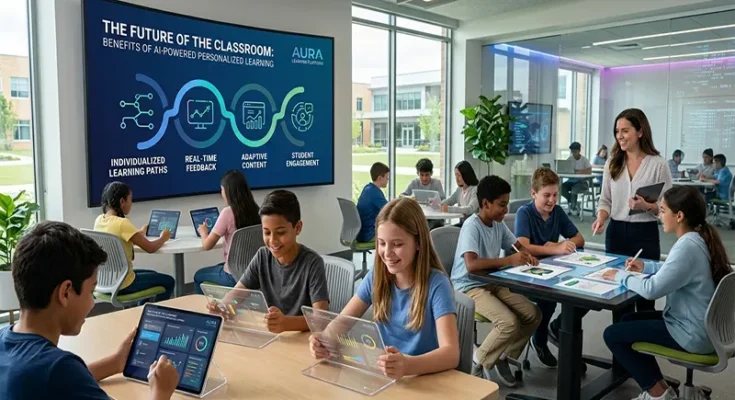
The Future of the Classroom: Benefits of AI-Powered Personalized Learning Platforms

The traditional “one-size-fits-all” model of education—where a single teacher delivers the same lesson to thirty students at the same pace—has long struggled to meet the diverse needs of every learner. Today, that paradigm is shifting. As artificial intelligence (AI) integrates into K-12 classrooms, it is ushering in a new era of “hyper-learning,” where education is tailored to the individual pace, interests, and proficiency levels of each student. By moving away from static curricula and toward adaptive, AI-driven environments, schools are discovering a more inclusive and effective path to academic success.

Adaptive Learning Paths: Education at Every Pace

The most significant shift AI brings to the classroom is the ability to create adaptive learning pathways. Traditional textbooks are linear, but AI-powered platforms are dynamic. By analyzing student performance in real-time, these systems can adjust the difficulty level of content instantaneously. If a student grasps a math concept quickly, the AI accelerates …

The Future of the Classroom: Benefits of AI-Powered Personalized Learning Platforms Read More
Unraveling Buyer Behavior: Using AI for Customer Behavior Analysis in E-commerce Stores

Unraveling Buyer Behavior: Using AI for Customer Behavior Analysis in E-commerce Stores

In a competitive e-commerce market, online computer stores in Indonesia face a major challenge: how to turn visit and click data into meaningful insights? Understanding what customers are looking for, why they buy, and what drives them away is key to increasing sales and building loyalty. However, with millions of data points generated daily, manually analyzing customer behavior is an impossible task.

This is where AI tools for analyzing customer buying behavior emerge as indispensable tools. AI can process and interpret data at scale, providing e-commerce stores with in-depth, actionable insights to drive business growth.

Difference Between Conventional Analytics and AI

Traditional customer behavior analytics, such as Google Analytics, provide basic metrics like number of visits, time on site, and most viewed pages. This provides a snapshot of what’s happening.

AI, on the other hand, uses machine learning to answer “why” and “how” questions in a more in-depth way. AI …

Unraveling Buyer Behavior: Using AI for Customer Behavior Analysis in E-commerce Stores Read More
Defining the Future: Leveraging Predictive Analytics and AI for Talent Needs Forecasting

Defining the Future: Leveraging Predictive Analytics and AI for Talent Needs Forecasting

In a dynamic job market, the ability to look ahead is an invaluable competitive advantage. For companies in Indonesia, this means shifting from reactive recruitment—filling vacancies when employees leave—to proactive recruitment—preparing teams for future business needs.This is where the role of predictive analytics and AI for forecasting talent needs becomes crucial.

By combining internal and external data, these powerful tools enable Human Resources (HR) teams to go beyond guesswork and instead forecast talent needs with data-driven precision.This is a fundamental shift that transforms recruitment into a strategic, future-oriented business function.

Difference Between Traditional and Predictive Forecasting

Traditional talent demand forecasting is typically based on simple historical data and intuition. Analysts will look at last year’s employee turnover rate and project the same figure into the following year. This method has significant limitations: it fails to account for market fluctuations, projected business growth, or emerging industry trends.

Predictive analytics and AI …

Defining the Future: Leveraging Predictive Analytics and AI for Talent Needs Forecasting Read More
Maximizing Sales, Reducing Losses: Using AI for Inventory Management in an Online Computer Store

Maximizing Sales, Reducing Losses: Using AI for Inventory Management in an Online Computer Store

In the world of e-commerce, particularly in online computer retail, inventory management is a delicate art. Overstocking can lock up capital and increase storage costs. Too little stock (stockouts) can lead to lost sales and disappointed customers. In the past, balancing these two relied on guesswork, limited historical data, and painstaking manual labor.

Now, AI for inventory management in online computer stores has changed this paradigm. Artificial intelligence (AI) is not just a tool, but a predictive brain that helps business owners make smarter, more profitable decisions. AI analyzes data in ways that humans cannot, providing precise insights to optimize every aspect of the supply chain.

How AI Is Changing the Inventory Management Game

AI brings intelligence to the inventory process by focusing on three key areas:

1. Accurate and Dynamic Demand Forecasting

Traditional demand forecasting relies on historical sales data. However, AI goes further by analyzing a broader and …

Maximizing Sales, Reducing Losses: Using AI for Inventory Management in an Online Computer Store Read More