


Finding the Balance: Healthy Computer Screen Time Limits for Elementary Students

Finding the Balance: Healthy Computer Screen Time Limits for Elementary Students

In the modern digital landscape, screens have become an inseparable part of childhood. From interactive classroom whiteboards and AI-enhanced learning apps to weekend video calls with distant family, technology is woven into the fabric of daily life. For parents of elementary school students (ages 6–11), this reality often brings a lingering sense of anxiety: Are they spending too much time on devices? Is this affecting their development?

The goal for modern parenting is no longer “screen abstinence,” which is increasingly impractical, but rather “digital intentionality.” By reframing our relationship with technology from a default activity to a purposeful tool, we can help our children navigate the digital world without sacrificing the essential experiences of childhood.

Understanding Developmental Needs

The elementary years are a critical window for cognitive, physical, and social development. During this time, the brain is highly plastic, forming the neural pathways that will support lifelong learning. Two foundational …

Finding the Balance: Healthy Computer Screen Time Limits for Elementary Students Read More
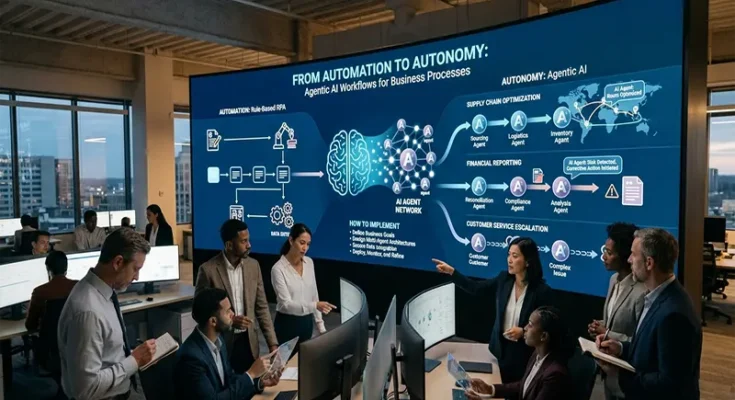
From Automation to Autonomy: How to Implement Agentic AI Workflows for Business Process Automation

From Automation to Autonomy: How to Implement Agentic AI Workflows for Business Process Automation

For years, businesses have relied on Robotic Process Automation (RPA) to handle repetitive, rule-based tasks. While effective for simple data entry, these tools are inherently brittle—they break if the process changes even slightly. The next frontier in digital transformation is Agentic AI. Unlike static automation, agentic systems are proactive, goal-oriented, and capable of reasoning through complex, multi-step workflows. By transitioning from rigid task-execution to autonomous goal-seeking, enterprises can finally unlock the true promise of intelligent operations.

The Core Architecture of Agentic Workflows

The shift to agentic systems requires moving away from the “if-this-then-that” logic of traditional automation toward a flexible, cognitive architecture. A robust agentic workflow is built on three foundational pillars:

  • Planning and Reasoning: At the heart of an agent is a Large Language Model (LLM) that functions as a “brain.” When given a high-level goal, the agent decomposes it into manageable sub-tasks. It doesn’t just execute a
From Automation to Autonomy: How to Implement Agentic AI Workflows for Business Process Automation Read More