

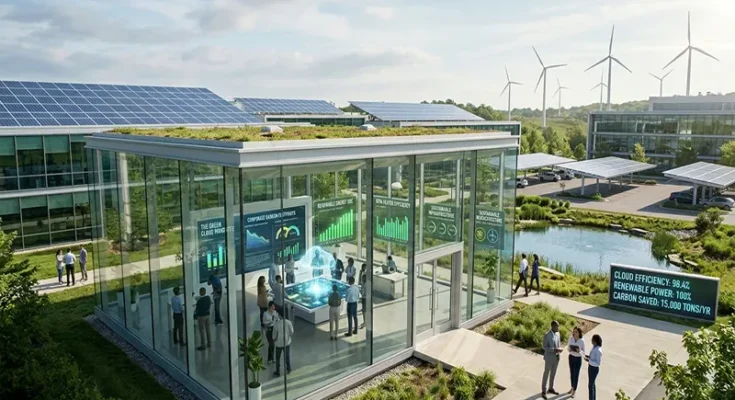
The Green Cloud Mandate: Reducing Corporate Carbon Footprints Through Sustainable Infrastructure
In 2026, the transition to the cloud is no longer just a driver of agility and cost-efficiency; it has become a core lever for corporate environmental, social, and governance (ESG) strategy. As digital operations expand, the “Green Cloud” has shifted from a sustainability buzzword to a board-level business requirement. While traditional on-premises data centers are often constrained by legacy hardware and inefficient cooling, hyperscale cloud environments offer a path to significantly lower carbon intensity per unit of compute.
The Four Pillars of Sustainable Cloud
Reducing IT-related carbon requires a multi-layered approach that moves beyond simple migration. Organizations are now focusing on four strategic pillars:
- Energy Efficiency: Hyperscale data centers utilize advanced infrastructure, such as liquid cooling and AI-driven power management, to achieve a Power Usage Effectiveness (PUE) ratio approaching 1.0. By consolidating workloads into these optimized environments, companies benefit from economies of scale that are impossible to replicate in private