
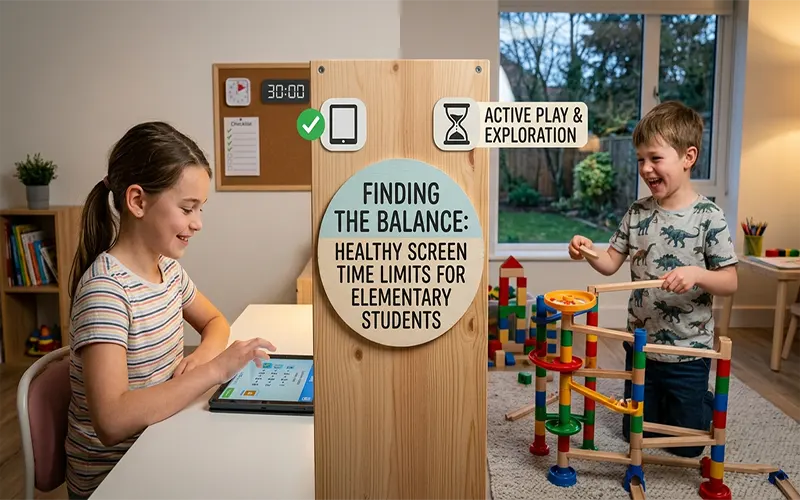
In the modern digital landscape, screens have become an inseparable part of childhood. From interactive classroom whiteboards and AI-enhanced learning apps to weekend video calls with distant family, technology is woven into the fabric of daily life. For parents of elementary school students (ages 6–11), this reality often brings a lingering sense of anxiety: Are they spending too much time on devices? Is this affecting their development?
The goal for modern parenting is no longer “screen abstinence,” which is increasingly impractical, but rather “digital intentionality.” By reframing our relationship with technology from a default activity to a purposeful tool, we can help our children navigate the digital world without sacrificing the essential experiences of childhood.
Understanding Developmental Needs
The elementary years are a critical window for cognitive, physical, and social development. During this time, the brain is highly plastic, forming the neural pathways that will support lifelong learning. Two foundational needs often compete with screen time:
- Physical Movement: Children need active, gross-motor play to build coordination, strength, and sensory processing skills. Prolonged sedentary time in front of a screen can contribute to postural issues and a lack of physical stamina.
- Social Interaction & Unstructured Play: There is no digital substitute for the lessons learned in face-to-face, unstructured play. Navigating disagreements on the playground or collaborating on a building project in the living room teaches empathy, negotiation, and creative problem-solving—skills that are notoriously difficult to master through an app.
- The Power of Boredom: Perhaps most importantly, children need “downtime.” Boredom is the precursor to creativity. When a child is not constantly stimulated by the rapid-fire rewards of digital content, they are forced to invent, imagine, and explore their own interests.
Defining Healthy Limits
Not all screen time is created equal. The developmental impact of a screen depends largely on the nature of the content and the child’s level of engagement.
- Active vs. Passive Engagement: We must distinguish between “Active” and “Passive” screen time. Passive consumption—scrolling through endless, algorithmically generated videos—offers little cognitive reward and often leaves children restless. In contrast, “Active” use—coding, digital art, collaborative educational gaming, or research—engages the brain’s higher-order thinking and creative faculties.
- Eye Health (The 20-20-20 Rule): To mitigate digital eye strain and the risk of myopia, teach children the 20-20-20 rule: Every 20 minutes, look at something 20 feet away for at least 20 seconds. This simple habit rests the eye muscles and prevents the fatigue associated with fixed-focus screen work.
- Frameworks for Usage: Rather than a strict “one hour per day” limit, consider a framework based on priorities. Ensure that physical play, sleep, homework, and family time are locked into the schedule first. Recreational screen time should then be viewed as a “leisure” activity to be balanced with other hobbies, rather than a default state.
Creating a Family Digital Plan
Consistency is the strongest tool in a parent’s arsenal. When technology usage is predictable, it removes the daily friction and negotiations that often lead to power struggles.
- Designate Tech-Free Zones: Establish clear boundaries in the home. The dinner table and bedrooms should be designated as tech-free zones. Protecting the bedroom from screens is particularly crucial, as it ensures that the sleep environment remains a place for rest rather than stimulation.
- Embrace Co-Viewing and Co-Playing: When a child is on a screen, be present when possible. Ask questions about what they are doing, play a game together, or help them troubleshoot a coding project. This transforms screen time from a solitary, isolating activity into a shared experience that strengthens the parent-child bond.
Technology is a tool, not a babysitter. As elementary students continue to grow into the digital age, our role as parents is to provide the guardrails and modeling necessary for them to eventually regulate themselves. If we model healthy habits—by putting our own phones away during conversations and prioritizing face-to-face connection—our children are far more likely to mirror that behavior. With intentionality, we can ensure that our children use technology to expand their horizons without losing their connection to the tangible, vibrant world around them.