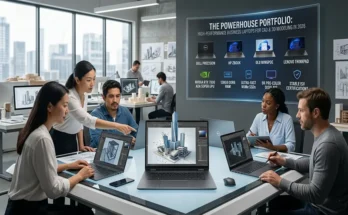

In the current enterprise landscape, the perimeter of the network has effectively dissolved. With hybrid work models, distributed teams, and an escalating frequency of sophisticated firmware-level cyberattacks, the era of relying on consumer-grade laptops for business operations is over. IT managers and CTOs are increasingly recognizing that security cannot be an “add-on” software layer; it must be baked into the silicon. This is where the Intel vPro platform becomes the essential gold standard, providing the foundation of stability, remote manageability, and hardware-enforced security required by modern organizations.
The Intel vPro Advantage: Beyond Performance
Intel vPro is often misunderstood as simply a badge for “high-performance” processors. In reality, it is a comprehensive management and security ecosystem. For an IT department, vPro is the difference between manageable infrastructure and chaotic IT debt.
The core advantage lies in Intel Active Management Technology (AMT), which allows IT teams to remotely discover, repair, and protect assets, even when the OS is unresponsive or the device is powered down. This “out-of-band” management capability is critical for reducing downtime. Whether it’s deploying security patches during off-hours or remotely troubleshooting a corrupted driver for a field employee, vPro drastically reduces the need for physical device interaction. For fleet-wide operations, this ensures consistent security posture across the entire organization, regardless of where the hardware is physically located.
Hardware Security Foundations: Building a Trustworthy Stack
Modern enterprise hardware must defend against threats that operate below the operating system level. When selecting a business machine, look for these three pillars of hardware-enforced security:
- TPM 2.0 (Trusted Platform Module): A dedicated hardware chip that stores sensitive data such as encryption keys and certificates. TPM 2.0 is the bedrock of disk encryption (like BitLocker) and ensures that the platform has not been tampered with before the OS loads.
- Biometric Authentication: Password-based security is a leading vulnerability. The inclusion of Windows Hello-compatible IR cameras and encrypted fingerprint sensors provides a seamless yet robust defense against credential theft, ensuring that access is tied to the physical identity of the user.
- Firmware and BIOS Protection: This is the new front line of cybersecurity. Technologies like Intel Hardware Shield provide silicon-level protection, defending the BIOS and firmware from rootkits and unauthorized modifications. By ensuring the “Root of Trust” is secured at the hardware level, these machines prevent malicious code from gaining persistence deep within the device.
Top Industry Picks for 2026
When procuring for a fleet, reliability and security engineering remain paramount. The following platforms are recognized for their commitment to these standards:
- The Workhorse: Lenovo ThinkPad T-Series & X1 Carbon. Long considered the industry standard for enterprise, these machines offer a perfect blend of durability and security. With rigorous military-spec (MIL-SPEC) testing and seamless vPro integration, they remain the top choice for companies requiring high reliability under heavy usage.
- The Fleet Favorite: Dell Latitude 5000/7000 Series. Dell’s strength lies in its exceptional supply chain management and deep integration with its own management tools. The Latitude line excels in enterprise manageability, offering consistent hardware configurations that make fleet-wide deployment and security auditing significantly easier for IT teams.
- The Security Specialist: HP EliteBook. HP differentiates itself through HP Wolf Security, a hardware-enforced, endpoint-to-cloud security stack. The EliteBook series is specifically designed for users who operate in high-risk environments, featuring self-healing BIOS and threat containment features that isolate suspicious files in a virtualized environment.
Procurement Strategy
Investing in Intel vPro-enabled hardware is an investment in reducing the Total Cost of Ownership (TCO). While the initial capital expenditure may be higher than consumer alternatives, the reduction in support tickets, the mitigation of security breaches, and the efficiency gains from remote management provide a clear return on investment.
Decision Checklist: Enterprise Procurement
Before finalizing your next fleet order, ensure you have verified these three critical criteria:
- Hardware-Verified Identity: Does the model include a dedicated TPM 2.0 chip and enterprise-grade biometric login options?
- Remote Recovery Capabilities: Does the specific SKU feature a full Intel vPro implementation to support remote, out-of-band IT management?
- Firmware Resilience: Does the manufacturer offer a self-healing BIOS or hardware-level threat detection (e.g., Intel Hardware Shield, HP Wolf Security) to defend against below-the-OS attacks?
By focusing on these hardware fundamentals, organizations can move from a reactive security posture to one defined by resilience and control.