The traditional “one-size-fits-all” model of education—where a single teacher delivers the same lesson to thirty students at the same pace—has long struggled to meet the diverse needs of every learner. Today, that paradigm is shifting. As artificial intelligence (AI) integrates into K-12 classrooms, it is ushering in a new era of “hyper-learning,” where education is tailored to the individual pace, interests, and proficiency levels of each student. By moving away from static curricula and toward adaptive, AI-driven environments, schools are discovering a more inclusive and effective path to academic success.
Adaptive Learning Paths: Education at Every Pace
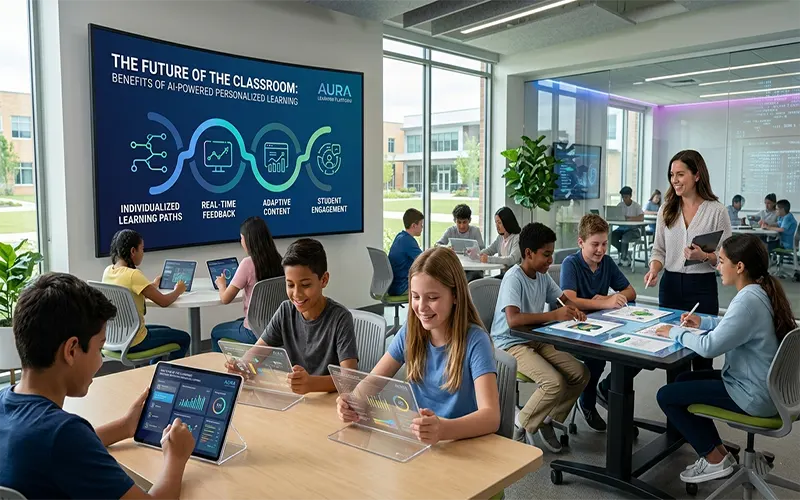
The most significant shift AI brings to the classroom is the ability to create adaptive learning pathways. Traditional textbooks are linear, but AI-powered platforms are dynamic. By analyzing student performance in real-time, these systems can adjust the difficulty level of content instantaneously. If a student grasps a math concept quickly, the AI accelerates them to more challenging material to prevent boredom. Conversely, if a student struggles, the platform provides scaffolded support and additional practice modules, ensuring they achieve mastery before moving on. This prevents the common pitfall of students falling behind because a class has moved on before they were ready.
Instant, Actionable Feedback
In a standard classroom, students often wait days for graded assignments to understand where they went wrong. By the time they receive that feedback, the momentum of the lesson is lost. AI changes this by providing immediate, constructive support. When students work on digital assignments, AI-driven tutoring systems can offer hints, explain the reasoning behind a correct answer, or suggest resources for remediation the moment an error occurs. This shift from delayed to real-time feedback not only builds student confidence but also fosters a growth mindset, encouraging learners to see mistakes as part of the process rather than a final judgment.
Teacher Empowerment: Reclaiming Instructional Time
A common misconception is that AI is designed to replace educators. In reality, it acts as a powerful force multiplier. Teachers spend a disproportionate amount of time on administrative tasks—grading multiple-choice assessments, tracking attendance, and organizing lesson materials. AI-powered tools can automate these routine duties, saving educators hours every week. By offloading the “paperwork” of teaching, educators reclaim time for what actually matters: mentorship, emotional support, and high-impact direct instruction. Teachers can shift from being the primary source of information to being facilitators of deeper, more meaningful learning experiences.
Early Intervention through Data Analytics
AI analytics turn classrooms into data-rich environments. These platforms track performance patterns that might be invisible to the human eye, such as subtle declines in engagement or recurring errors in specific subjects. This allows educators to adopt a proactive rather than reactive stance. By identifying “at-risk” students early, teachers can intervene before a gap in knowledge compounds into a significant academic setback. This level of granular visibility ensures that no student is left to struggle in silence.
Accessibility and Equity
Perhaps the most noble application of AI in education is its ability to level the playing field. For students with disabilities or non-native language learners, the classroom can be an intimidating space. AI features such as real-time transcription, text-to-speech, translation, and adaptive visual interfaces remove traditional barriers. These tools allow students to engage with the same high-quality content as their peers, adjusted to meet their specific needs. When designed equitably, AI becomes a bridge, ensuring that high-quality, differentiated instruction is accessible to every learner, regardless of their background.
The Human-AI Partnership
While the capabilities of AI are transformative, it is vital to remember that the most effective learning environments remain human-centered. AI provides the data, the speed, and the customization, but human educators provide the empathy, the moral guidance, and the social-emotional support that a machine can never replicate. The ideal classroom of the future is not AI-first; it is learning-first, where technology serves as a tool to support the teacher-student relationship rather than replacing it.
As we look toward the future of education in 2026 and beyond, the integration of AI-powered personalized learning platforms is no longer a luxury—it is a necessity. By embracing these tools, schools can create environments that respect the unique pace of every child, support teachers in their vital mission, and ensure that the promise of a quality education reaches every student. The technology is here; the next step is thoughtful, intentional implementation that keeps the learner at the heart of the digital evolution.